Abstract :
Based on research in American, Hungarian, and Ghanaian archives, as well as oral testimonies collected from now-aged Ghana Young Pioneers, the thesis explores the politics of nation and youth in the Cold War era. The overlapping dynamics of national politics and Cold War tensions highlight how efforts to create a new society involved a struggle over the future of the polity.
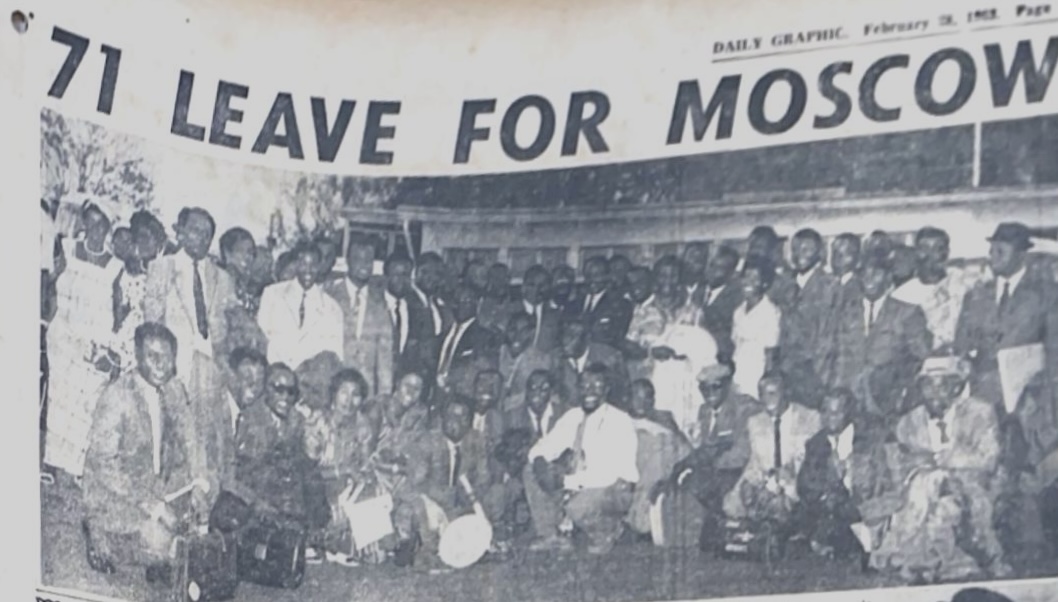
The research foregrounds the experiences of young Ghanaians recruited in the 1960s by the Kwame Nkrumah-led government to travel to the Soviet Union for training. It follows their mission as agents of the new nation and their fate following the 1966 coup that toppled Nkrumah and dramatically realigned Ghana’s politics in the Cold War world. By centering Ghanaian youth migration and political displacement, processes that unfolded in Ghana and outside the country, the study demonstrates how identity politics may be rooted in interlocking dynamics of power and oppression.
This perspective –informed by multi-sited and multimodal research – foregrounds African identities and insists on understanding African history in a global context. The transnational framework also shows how migration could create ‘sacrificial citizens’, whose individual interests sometimes intersected with national priorities, sending them along uncertain trajectories that brought great cost to migrants themselves. The focus on historical actors from Ghana will center local knowledge and develop a decolonial understanding of the global Cold War.
Research background :
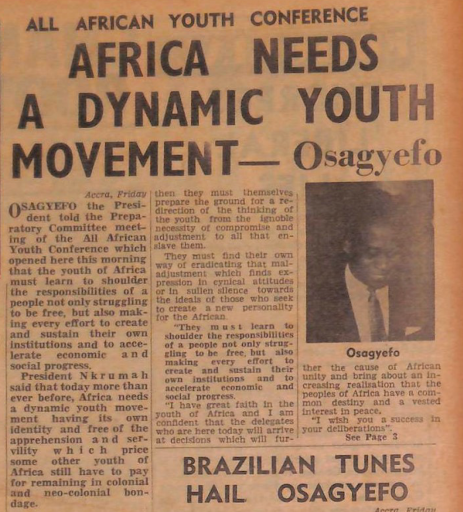
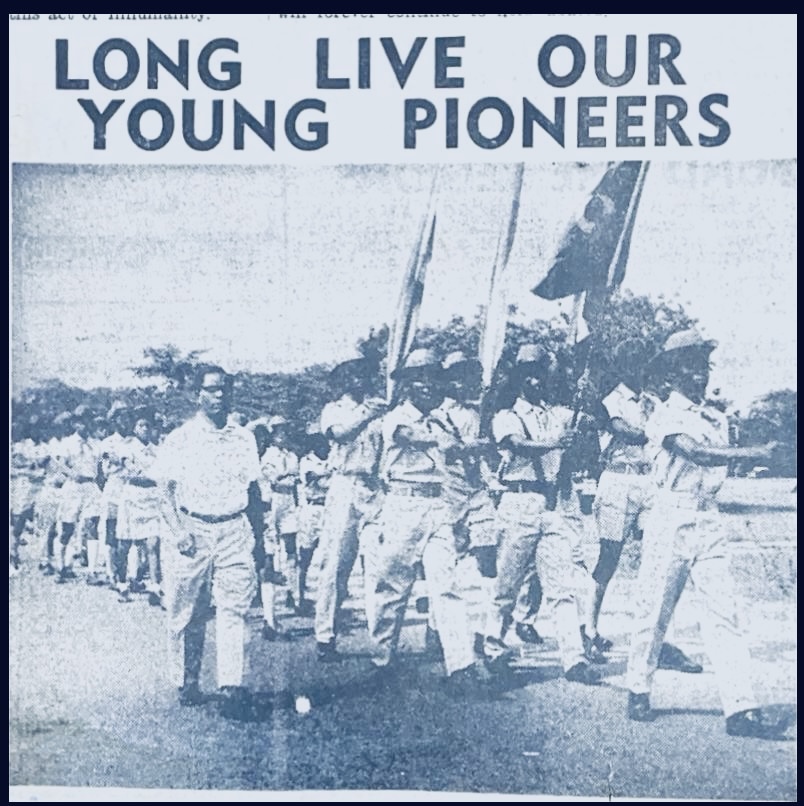
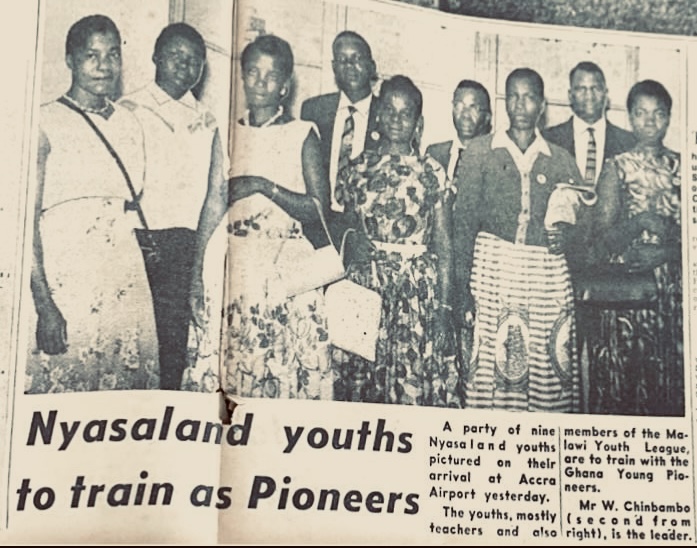
During the Kwame Nkrumah era (1957–1966), at a time when empires of justice and freedom interacted with ‘Third World’ revolutionaries on a quest for decolonization, young Ghanaians were recruited as part of a bold vision to build the nation through education and ideology. Motivated by promises of empowerment and opportunity, many young people traveled to Eastern bloc countries for studies and training, engaging directly with competing global ideologies. While their journeys were often seen as official state ventures, they actively shaped their own realities, asserting their agency and forging paths that reflected personal convictions within what appeared to be a state-controlled agenda.
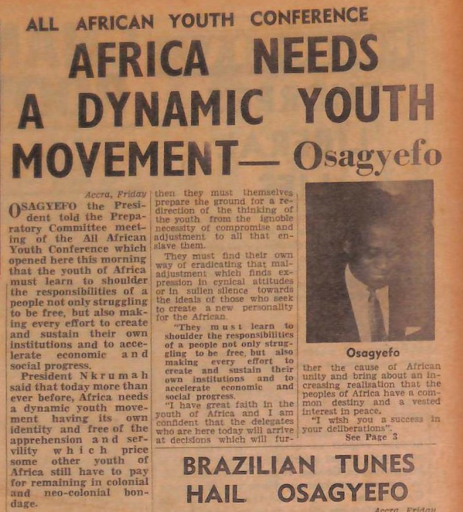
PRAAD, NP3_34_Evening News_Oct 16 1961_p7
Africa’s Cold War relations reflect significant international and transnational connections, ideological affiliations, intercultural exchanges, and other remarkable trajectories and forgotten chapters (Katsakioris, 2017; Schenck, 2018). The experiences of young Ghanaians both at home and abroad reveal a complex web of hope, disappointment, and resilience. Life in the East often meant confronting racism and disillusionment, as the realities did not always match the promises of anti-imperialist solidarity (Hessler, 2006). At home, the Ghana Young Pioneers also had to navigate their training as agents of the new nation and their positions within a political landscape marked by contestation over the future of the polity. By 1965, Nkrumah and Soviet affiliated persons had become the target of the opposition party, the pro-West National Liberation Council (NLC). Political and ideological affiliations drew a clear line to define who belonged (Allina, 2021).
After Ghana’s 1966 coup toppled Nkrumah, many of these young pioneers and young returnees from the East found themselves excluded from the new [pro-West]nation-building projects, their stories relegated to the margins. The memories of these youth threaten the image of the East as an empire of Justice, the West as an empire of Freedom, and at times the post-independence state as an agent of unity.
Despite official silence (reflected in the destruction of archival documents on the young pioneers), their experiences live on in gossip, songs, and the quiet exchanges of family and friends, shaping both private memories and public perceptions. These narratives challenge the idea that history belongs only to the victors or those in power. Instead, they remind us that national histories are also built from the lives of those remembered only in fragments—often hidden, sometimes suppressed, but always significant.
I am motivated to research these so-called ‘ghost stories’ not simply for their intrigue, but because they show how ordinary people can both embody and disrupt larger historical forces. By centering the lived experiences of Ghanaian youth during this period, my research seeks to retell the nation’s history from the ground up, foregrounding the voice of those too often silenced or forgotten.
Research methods :
- Understanding the nuances of migration experiences in Africa requires sensitivity to local contexts, historical legacies, and power dynamics. The research adopts a qualitative and historiographical approach that combines primary and secondary data – collected through fieldwork – used in a complementary manner.
- Literature Review: I adopt an interdisciplinary approach which gives pride in place to history, while also incorporating insights from sociology, international relations, gender analysis, and local knowledge.
- Primary (Archival) Data: The research involves multi-sited archival work (in Ghana, the US and Budapest) to provide transnational perspectives. I explore published and unpublished documentary sources (news coverage, correspondence, memos, reports) in Ghana, and alternative archival sources in the U.S. National Security Archive, and the Vera and Donald Blinken Open Society Archives, Budapest. I also utilize statistical data from the Ghana Scholarships Secretariat (est. 1960), the Ghana Immigration and Passport Unit (under Ministry of Interior files), and other government data from online Russian archives.
- Primary (Oral) source: The research relies heavily on oral testimonies collected through semi-structured interviews in Ghana. These interviews, collected in different regions of the country, capture geographic, cultural, and political diversity and speak to the polyvocality in nationalist history. I complement interview data with focus group discussions in each region of focus. The recorded interviews are transcribed, with particular attention to historicizing rumour, gossip, and songs.
- Analysis: I employ interpretivist methods to foreground endogenous perspectives through the ‘eyes’ and ‘voices’ of the historical actors, whose experiences and memories serve as critical sources for understanding this history.
Primary references/citations:
- Alexander, Jocelyn, and JoAnn McGregor. “African Soldiers in the USSR: Oral Histories of ZAPU Intelligence Cadres’ Soviet Training, 1964–1979.” Journal of Southern African Studies 43, no. 1 (January 2, 2017): 49–66.
- Allina, Eric. “Bright Lines and Fault Lines: Mozambique.” Canadian Journal of African Studies, 55, no. 3 (September 2, 2021): 475–96.
- Allman, Jean. “Kwame Nkrumah, African Studies, and the Politics of Knowledge in the Black Star of Africa.” International Journal of African Historical Studies 46, no. 2 (2008).
- Burton, Eric. “Navigating Global Socialism: Tanzanian Students in and beyond East Germany.” Cold War History 19, no. 1 (June 25, 2018): 63–83.
- HESSLER, Julie. “Death of an African Student in Moscow.” Cahiers Du Monde Russe 47, no. 1-2 (June 1, 2006): 33–63. https://doi.org/10.4000/monderusse.9591.
- Katsakioris, Constantin. “Burden or Allies?: Third World Students and Internationalist Duty through Soviet Eyes.” Kritika: Explorations in Russian and Eurasian History 18, no. 3 (2017): 539–67. https://doi.org/10.1353/kri.2017.0035.
- Kret, A. J. “‘We Unite with Knowledge’: The Peoples’ Friendship University and Soviet Education for the Third World.” Comparative Studies of South Asia, Africa and the Middle East 33, no. 2 (January 1, 2013): 239–56. https://doi.org/10.1215/1089201x-2322516.
- Mballa, Doreatha Drummond. Kwame Nkrumah and the Young Pioneer Movement. CreateSpace Independent Publishing Platform, 2017.
- Osei-Opare, Nana. “Uneasy Comrades: Postcolonial Statecraft, Race, and Citizenship, Ghana-Soviet Relations, 1957–1966.” Journal of West African History 5 (2): (2019): 85.
- Telepneva, Natalia. “Saving Ghana’s Revolution: The Demise of Kwame Nkrumah and the Evolution of Soviet Policy in Africa, 1966 - 1972.” Journal of Cold War Studies 20 (4) 2018: 4–25.
- Schenck, Marcia. “A Chronology of Nostalgia: Memories of Former Angolan and Mozambican Worker Trainees to East Germany.” Labor History 59, no. 3 (February 16, 2018): 352–74.
- ———. “From Luanda and Maputo to Berlin: Uncovering Angolan and Mozambican Migrants’ Motives to Move to the German Democratic Republic (1979–1990).” African Economic History 44, no. 1 (2016): 202–34. https://doi.org/10.1353/aeh.2016.0008.
- ———. “Negotiating the German Democratic Republic: Angolan Student Migration during the Cold War, 1976–90.” Africa 89, no. S1 (January 2019): S144–66.
- Westad, Odd Arne. The Global Cold War: Third World Interventions and the Making of Our Times. Cambridge: Cambridge University Press, 2007.
- Williams, Justin. Pan-Africanism in Ghana: African Socialism, Neoliberalism, and Globalization. Durham, North Carolina: Carolina Academic Press. 2016.
Project Gallery