Abstract :
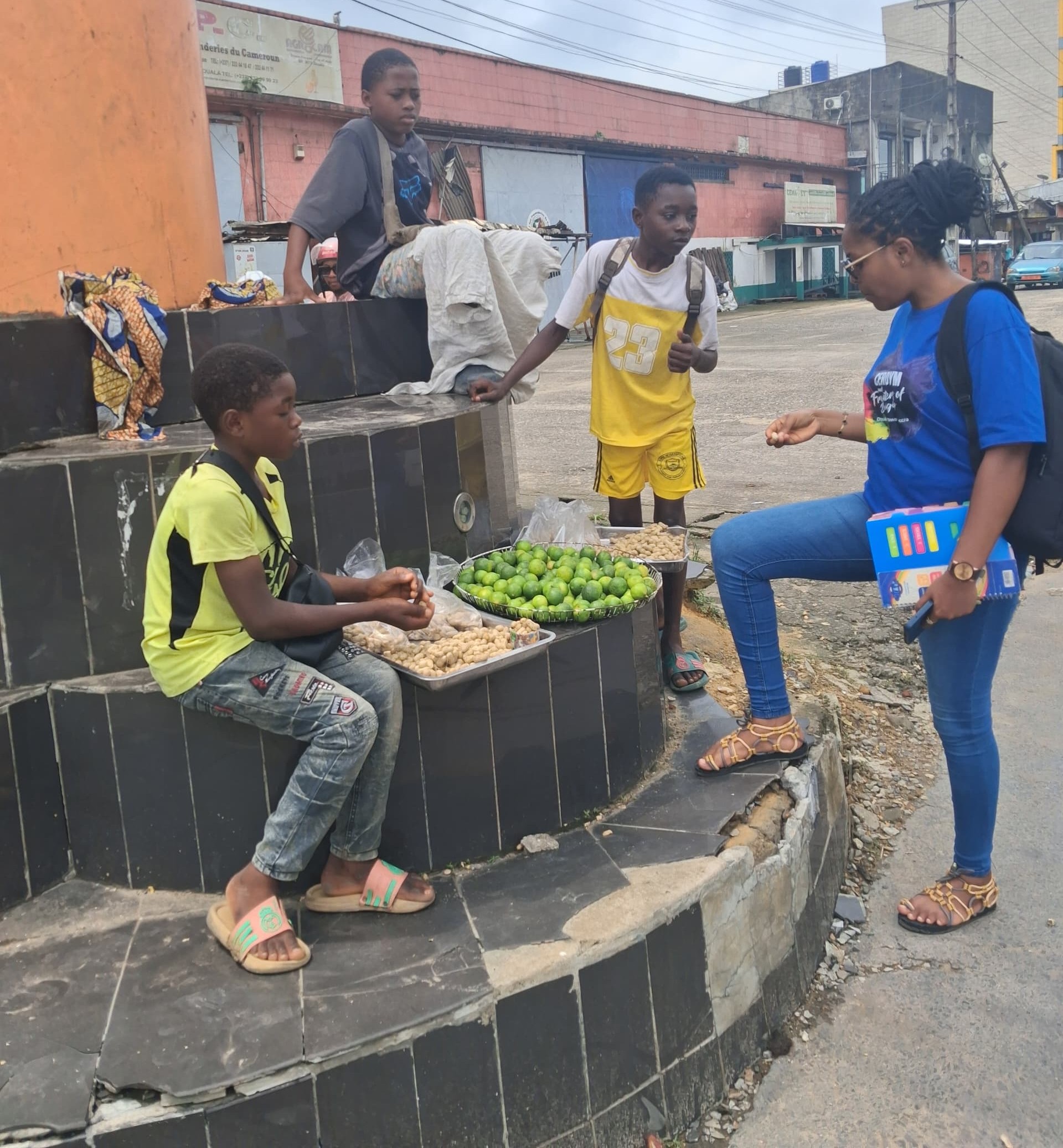
The presence of Internally Displaced Women (IDW) from the Anglophone crisis has become a strategic communications lever for the municipality of Douala IV. Acting in a context of national media silence and strong political sensitivity, the municipality deliberately adopted the principle of “Doing is Communicating” (Watzlawick et al., 1972, p. 48). The positive image of the territory is not constructed by speech, but by concrete proof of action on the ground.
This approach is anchored in the Theory of Social Constructivism (Berger & Luckmann, 1966), where the municipality seeks to externalize its political intention and construct a favorable reality. It achieves this by actively supporting the resilience and self-organization of the IDW. Associations, training and various supports allow women to project their strength of character, thus deconstructing the Social Representation (SR) of the passive victim to impose that of the active entrepreneur (Abric, 1994).
Individual successes are integrated into municipal storytelling (Salmon, 2007) and showcased during public events (Goffman, 1959). This positive instrumentalization directly serves Place Branding: the success of the IDW becomes proof of performance which strengthens the reputation of Douala IV (Fombrun, 1996) as an efficient, humane and united city (Kavaratzis & Hatch, 2013). The visible and successful management of IDW legitimizes social spending among local citizens and ensures strategic alignment with the financing criteria of social associations and national NGOs, guaranteeing the attractiveness and stability of the territory.
Research background :
- Contextual Motivation: The Challenge of Media Silence and Legitimization
The primary motivation is to analyze communication strategies in the context of national media silence and political sensitivity. The Cameroonian context requires an unconventional analysis to understand how a local authority, Douala IV, legitimizes its action and the allocation of its resources to the host populations without the support of the national press (Fombrun, 1996, pp. 7-10).
The research aims to determine how the municipality forces its image to exist and maintain its credibility in the face of international partners despite the absence of traditional coverage, transforming the absence of media into an imperative for action (Bourdieu, 1994, pp. 140-145).
- The Theoretical Framework: Action as Construction of Reality
The theoretical motivation is to apply Social Constructivism to territorial marketing. We seek to prove that the principle "Doing is Communicating" is not just a theory, but a survival strategy for municipal image. The research uses the concept of Externalization (Berger & Luckmann, 1966, p. 77) to analyze how concrete actions to help the IDF (doing) constitute the only way to actively build the reality of a united city.
This involves studying how the municipality converts an experienced social reality (the crisis) into a desired reality (resilience), all supported by the pragmatics of communication (Watzlawick et al., 1972, p. 48).
- The Innovative Role of Women Displaced by the Anglophone Crisis in Place Branding (Municipality of Douala IV).
The research is motivated by the study of the role of the marginalized individual (the FDI) in Place Branding. She analyzes how the municipality positively exploits the resilience and positive Social Representations (SR) of women (Abric, 1994, pp. 55-60) to strengthen its symbolic capital.
The FDI, as an involuntary ambassador, allows Douala IV to differentiate itself by anchoring itself on strong human values (Kavaratzis & Hatch, 2013). The motivation is to decipher how individual successes, mediated by storytelling (Salmon, 2007, pp. 45-50), are strategically used to support the reputation of local governance.
Research methods :
- Literature Review: Understanding the Context and Strategy
This literature review aims to establish a solid theoretical and empirical framework for analyzing the use of Internally Displaced Women (IDWs) as a communication tool within the Douala IV district. Empirically, this review will focus on reports from humanitarian organizations (UNHCR, IDMC) on the vulnerability of IDWs in Cameroon, specifically examining Women Heads of Households (WHHs) to understand the raw material of this communication strategy namely, the initial state of the IDWs.
Theoretically, it is crucial to consolidate the conceptual basis of the work: Social Constructivism (Berger & Luckmann, 1966) for the analysis of image construction, Place Branding (Kavaratzis & Hatch, 2013) and Reputation Theory (Fombrun, 1996) to measure territorial issues, and finally Social Representation Theory (SRT) (Jodelet, 1989; Abric, 1994) to decipher the perceptions and stereotypes that the municipality tries to modify through its communication action ("Doing is Communicating").
- Qualitative Interviews: Gathering Stories and Perceptions
The interview phase aims to collect rich and nuanced primary data in the field, allowing us to grasp the lived experience of the instrumentalization and communication strategy in the absence of national media coverage. Key stakeholders will be segmented into three groups to cross-reference perspectives: first, the FDI themselves (the mechanism), particularly those involved in Common Initiative Groups (CIGs) or micro-enterprises funded by the municipality, to assess their perception of the aid and their sense of being valued or utilized; second, Municipal Actors (the sender), to document their communication strategy in the face of media silence and the justification for the instrumentalization of the FDI cause; third, Key Partners (the intermediary receiver, such as NGOs and neighborhood leaders), to assess the credibility and impact of Douala IVe's actions on the territory's reputation and on local social perceptions.
- Thematic Analysis: Decoding Messages and Representation
Thematic analysis is a systematic qualitative approach applied to data from interviews and municipal documents, aimed at identifying recurrent and structuring themes that explain the effectiveness of the communication strategy. Central themes will include the Theme of Evidence, which will analyze how success stories of FDI validate the principle of “Doing is Communicating” and reinforce municipal legitimacy; the Theme of Double Representation, which will examine the tension between the Representation of the Victim (necessary for humanitarian aid) and the Representation of the Contributor (necessary for Place Branding); and finally, the Theme of Intermediation, which will highlight the essential role of NGOs and local social networks as alternative communication channels to bypass the national media void and ensure message dissemination.
Primary references/citations:
- Ouvrages Abric J-C (1994), Pratiques sociales et représentations, Presses Universitaires de France, pp.55-60.
- Bakewell O. et Shouten L. (2016), Where are the numbers? Assessing the extent of South-South migration in Africa, Journal of ethnic and migration studies, 42 (12), 2055-2071.
- Balandier Georges (1971), Sens et puissance : les dynamiques sociales, Presse Universitaire de France (PUF), pp.11-73.
- Berger P. et Luckmann T. (1966), the Social Construction of Reality : A treatise in the sociology of knowledge, Anchor Books, pp.30-35.
- Bigaut Christian, (1988), La communication gouvernementale, La revue administrative, 41e année, n°244, pp.371-378.
- Bougnoux Daniel (1995), La communication contre l’information, Hachette (collection Questions de société).
- Bourdieu Pierre (1980), Le sens pratique, Paris, les Editions de minuit, pp.87-177.
- Bourdieu Pierre (1979), la distinction : critique sociale du jugement, Paris, Les Editions de minuit, pp.87-231.
- Bourdieu Pierre (1991), Language and symbolic power, Harvard University Press.
- Bourdieu Pierre (1993), La misère du monde, Paris, Seuil.
- Bourdieu Pierre (1994), Raisons Pratiques : Sur la théorie de l’action, Paris, Seuil, pp.140-145.
- Breton P. et Poulx S. (2014), L’explosion de la communication à l’aube du XXIe siècle, la Découverte.
- Casltle Stephen. et Miller Mark (2009), the age of migration : international population movement in the modern Worl, Guilford Press.
- Coombs W. Timothy (2007), Ongoing crisis communication: Planning, managing, and responding (2e edition), Corporate Reputation Review, Vol.10, N°3, 2007, pp.163-176.
- Dérida Jacques (1967), De la grammatologie, Paris, les éditions de minuit.
- Dérida Jacques (1993), Spectre de Marx : l’état de la dette, le travail du deuil et la nouvelle internationale, Paris, éditions Galilée.
- Fassin Didier (2011), La raison humanitaire : une histoire morale du temps présent, Paris, Gallimard.
- Floch Jean M. (1995), Identités visuelles, Paris : Editions la découverte.
- Fombrun C. (1996), Reputation : Realizing value from the corporate image, Havard Business School Press, pp.7-10.
- Foucault Michel (1975), Surveiller et punir : naissance de la Prison, Paris, Gallimard, pp.139-250.
- Foucault Michel (1976), Histoire de la sexualité, vol1: la volonté de savoir, Paris, Gallimard, pp.177-211.
- Foucault Michel (2004), la naissance de la biopolitique. Cours au collège de France (1978-1979), Paris, Seuil/Gallimard, pp.107-109.
- Foucault Michel (1994), « Le jeu de Michel Foucault » (1977), Dits et écrits, tome II, Paris, Gallimard, p.299.
- Foucault Michel (1977), La volonté de savoir (histoire de la sexualité, tome 1), Paris, Gallimard
- Foucault Michel (1977), Le jeu de Michel Foucault, Ornicar, n°10, pp.62-93.
- Giddens Anthony (1984), the constitution of society: Outline of the theory of the structuration, Polity Press.
- Goffman E. (1959), The Presentation of self in Everyday Life, Anchor Books, pp.20-30.
- Habermas jugern (1993), L’espace public : archéologie de la publicité comme dimension constitutive de la société bourgeoise, Traduit par Marc B. de Launay, Paris : Payot, pp.11-35.
- Jodelet Denise (1989), Les Représentations Sociales, Paris : Presses Universitaires de France.
- Libaert Thierry (2015), La communication de crise (4e éd.), Dunod.
- Moscovici Serge, (1961), La Psychanalyse, son image et son public, Paris : Presses Universitaires de France.
- Moscovici, Serge (1984), The phenomenon of social representations, In R.M. Farr & S.
- Moscovici (), Social Representations, Cambridge University Press, pp.3-69.
- Roux-Dufort Chistophe (20002), Gérer et décider en situation de crise, Ed. Dunod, p.1.
- Shannon C. E., & Weaver, W (1949), The Mathematical Theory of Communication, University of Illinois Press.
- Salmon Christian, (2007), Storytelling : La machine à fabriquer des histoires et à formatter les esprits, la Découverte.
- Sen A. (1981), Poverty and famines: An essay on entitlement and deprivation, Oxford: Clarendon Press, pp. 154-166.
- Fraser N. (1990), Rethinking the public Sphere: A contribution to the critique of actually existing democracy, Social text (25/26), pp.56-80.
- Tcherkassof Jean F. (2005), la communication institutionnelle : le pouvoir des discours, Paris, L’Harmattan.
- Varadarajan P. R. et Menon (1988), Cause-Relate Marketing : A co-alignment of Marketing Strategy and corporate Philanthropy, Journal of Marketing, 52 (3), pp.58-60.
- Watzlawick Paul, Janet Helmick B., Don D. Jackson (1972), une logique de la communication, Paris, Seuil.
- Watzlawick Paul, Beavin Bavelas, Janet Jackson, Don D. (1972), Une logique de la communication, Paris, Seuil (édition originale anglaise 1967)
- Winkin Yves (1996), La Nouvelle Communication : De la théorie de l'information aux modèles d'interaction, Paris, Seuil. (Rééditions fréquentes).
- Winkin Yve (2001), La nouvelle communication, Seuil.
- Wolton, D. (2009). Informer n'est pas communiquer. CNRS Éditions.
- Articles de Revues et Journaux Abwa Daniel (2013), « le Cameroun, le 1er janvier 1960. Une proclamation de l’indépendance entre peur et allégresse ». Les indépendances en Afrique, édité par Odile Goerg et al. Presses universitaires de Rennes, https://doi.org/10.4000/books.pur.112298. pp.317-326.
- Amnesty International (2023), Rapport sur la situation de la population de la région du Nord-Ouest Cameroun. P.11.
- Duriez Tiphaine (2019), les transpositions urbaines du déplacement forcé en Colombie: spatialisation, catégorisation et transformation d’une dynamique migratoire, l’Espace géographique, Tome 48(1), 21-38.
- Gaultier-Guillard Sophie, Cros Michel (2010), les impératifs hypothétiques d’une communication de crise réussie, hal-00556617, p.28.
- ICG, Cameroun : Etat fragile, 2010, p.25.
- Kavaratzis et Hatch M.J (2013), The dynamics of place brands: An identify-based approach to place branding theory, European Journal of Marketing, 13 (1), pp.69-86.
- Nkot Pierre F. (1999), le referendum du 20 mai 1972 au Cameroun : une analyse de quelques tendances de la doctrine ». Les cahiers de droit 40, n°3 (1999) : 665-690. https://doi.org/10.7202/043565ar.
- Nkolo Foé (2017), Le séparatisme anglophone au Cameroun et la guerre hybride. https://agoraafricaine.info/2017/01/20/le-separatisme-anglophone-au-cameroun-et-la-guerre-hybride-par-Nkolo-Foé-philosophevice-president-du-codesria, consulté le 16 septembre 2024.
- Internationale Crisis Group (ICG) (2017), la crise anglophone à la croisée des chemins, https://www.crisisgroup.org/fr/africa/central-africa/cameroon/250-cameroons-anglophone-crisis-crossroads. P.6.
- UN-Habitat (2024), Douala profil urbain, https://unhabitat.org/fr/douala-3-spatial-profile-cameroun.
- UNHCR (Haut-Commissariat des Nations Unies pour les Réfugiés) (2020), Rapport de situation sur les déplacements internes liés à la crise dans les régions du Nord-Ouest et du Sud-Ouest du Cameroun.
- UNICEF (2021), Rapport sur la situation des femmes et des enfants déplacés internes au Cameroun.
Project Gallery